What's the Best Legal Tint in Florida for Night Driving?
If you are wondering what the best legal tint in Florida is for night driving, the short answer is this: you need a film and shade combination that stays within Florida's legal VLT limits while still giving you clear visibility after dark. That matters because tint darkness has a direct effect on how much light reaches your eyes at night, especially on unlit roads in Gainesville, High Springs, Newberry, Ocala, and Lake City. At the same time, darker tint is not automatically better or automatically more dangerous because film technology varies widely. Another detail many drivers miss is that police measure the combined visible light transmission of the factory glass plus the aftermarket film, not the film rating alone. For many vehicles, a Florida legal ceramic tint can be a smart choice because it offers style, heat rejection, and UV protection without sacrificing night driving safety. The right option depends on your vehicle, the film technology, and how often you drive after dark.
Table of Contents
- Florida's legal tint limits explained
- Why tint darkness affects night driving visibility
- Does ceramic tint improve night visibility compared to dyed film
- The best legal tint options for night driving in Florida
- Common tint mistakes that cause night visibility problems or tickets
- What happens if you get pulled over with illegal tint
- How to choose the right film with a professional installer
- FAQ
Florida's legal tint limits explained
Florida window tint law is based on visible light transmission, or VLT. VLT is the percentage of visible light that can pass through the glass and film together. Lower numbers mean darker tint. Higher numbers mean lighter tint.
Direct answer: Florida's legal tint rules differ by vehicle type, and the legal result is based on the finished glass, not just the tint film label.
Why combined VLT matters
Many drivers think a film marketed at a certain percentage will automatically be legal. That is not always true. Factory glass already blocks some visible light. Once film is added, the final VLT can drop below what is allowed. This is one of the most common reasons drivers end up with a Florida tint ticket.
Florida legal VLT limits by vehicle type
| Window area | Sedan legal VLT | SUV, van, truck legal VLT |
|---|---|---|
| Front side windows | 28% minimum | 28% minimum |
| Back side windows | 15% minimum | 6% minimum |
| Rear window | 15% minimum | 6% minimum |
| Windshield | Non-reflective tint above the AS-1 line only | Non-reflective tint above the AS-1 line only |
Sedans and SUVs do not have the same rules
This is important for Gainesville drivers comparing cars and larger vehicles. Front side windows are treated the same, but rear glass rules are more flexible for SUVs, vans, and trucks. If you drive a sedan, you have less room to go dark on the back half of the vehicle while staying legal.
Legal tint Florida questions usually start with the front windows
For night driving, the front side windows matter most because they affect side mirror visibility, intersections, lane changes, and awareness of pedestrians or cyclists. That is why the best tint for night driving usually focuses on staying comfortably legal on the front doors and using film quality, not just darkness, to improve comfort.
Why tint darkness affects night driving visibility
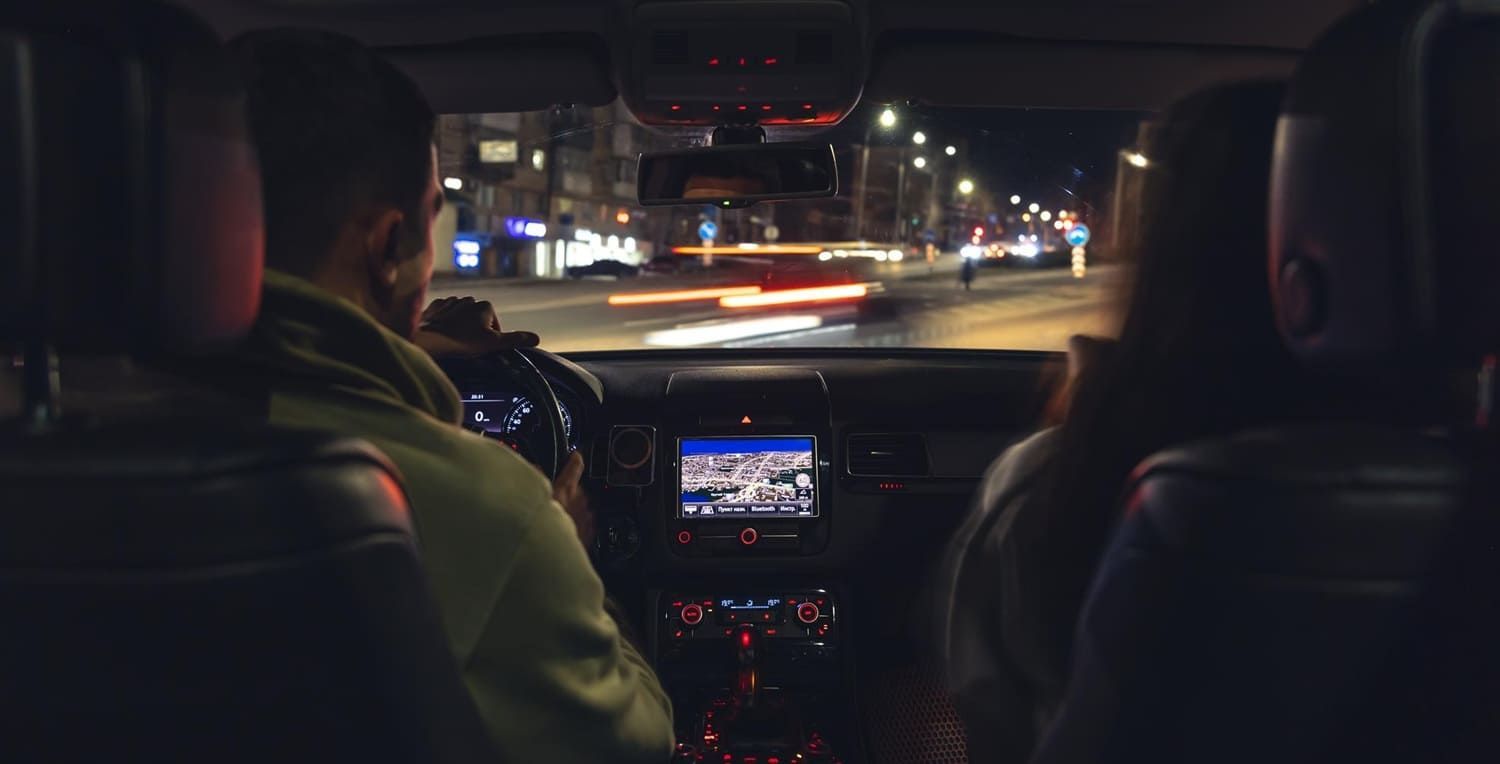
Tint darkness affects night driving because it reduces the amount of visible light entering the vehicle. At night, your eyes already work with less ambient light. Any additional reduction can make it harder to see poorly marked roads, rain, pedestrians, curbs, and obstacles.
Darker tint is not always unsafe, but it can create tradeoffs
The question is not simply whether dark tint is bad. The real issue is whether the final VLT on your vehicle gives you enough usable visibility for how and where you drive. A person who mostly drives in bright urban areas may tolerate darker glass better than someone driving rural roads around Alachua County at night.
Night visibility problems show up in specific situations
Most drivers notice tint issues during left turns, backing up in dark lots, checking side traffic on unlit streets, and driving in heavy rain. These situations require quick contrast recognition. If tint is too dark, objects can disappear into shadows until the last second.
Film quality changes how darkness feels
Two films with similar shade ratings can look different at night. Higher quality films often have better optical clarity and a more neutral appearance. That can make nighttime viewing feel cleaner and less distorted than lower grade film, even when the VLT numbers are similar.
Key takeaway: the darker the final glass, the more careful you need to be about preserving clear visibility. For many drivers, legal and lighter is better for nighttime safety than chasing the darkest possible look.
Does ceramic tint improve night visibility compared to dyed film
In many cases, yes. Ceramic tint is often a better choice for night driving than basic dyed film because it can deliver strong heat rejection and glare control without needing to go as dark to feel effective.
Why dyed film can be limiting
Dyed film is usually chosen for appearance and budget. It can help with glare and privacy, but it often provides lower heat rejection than premium technologies. That can push some drivers toward darker shades than they actually need, which may hurt night visibility.
How ceramic film helps drivers stay comfortable at lighter shades
Ceramic film is designed to reject heat and UV more effectively while maintaining a clean look. Because the film technology does more of the work, many drivers can choose a lighter legal VLT and still get the comfort benefits they want. That is a major reason ceramic tint Gainesville drivers choose is often recommended for vehicles used after dark.
Carbon film sits in the middle
Carbon film is often viewed as a step above dyed film in durability and heat control. It can be a solid middle option, but premium ceramic film is typically the better fit when night driving clarity is a top priority.
Film comparison for Florida drivers
| Film type | Legal VLT compatibility | Night visibility clarity | Heat rejection performance | UV protection level | Glare reduction | Durability and fade resistance | Typical cost range |
|---|---|---|---|---|---|---|---|
| Dyed film | Can be legal, but final VLT must be checked carefully | Fair to good depending on quality | Basic to moderate | Moderate to high depending on product | Moderate | Lower long term fade resistance | Lowest |
| Carbon film | Can be legal with proper film selection | Good | Moderate to good | High depending on product | Good | Better durability than dyed film | Mid range |
| Ceramic film | Excellent when matched to legal target VLT | Very good to excellent optical clarity | High | High | Good to excellent | Strong long term durability and fade resistance | Highest |
Why FormulaOne ceramic film fits this use case
For drivers who want legal VLT Florida compliance with better comfort and long term performance, LLumar FormulaOne ceramic film is a premium option. As an authorized LLumar SelectPro Dealer, Custom Glass Tinting can recommend FormulaOne products that offer high quality optical clarity, strong heat and UV rejection, and long term durability backed by a lifetime warranty. That makes it easier to stay within legal limits while still choosing a film that feels refined day and night.
The best legal tint options for night driving in Florida
The best tint for night driving is usually not the darkest legal tint. It is the lightest shade that still gives you the comfort, look, and heat control you want.
Best overall choice for many Florida drivers
A quality ceramic film in a legal front window range is often the best overall solution. Many drivers prefer a shade that remains comfortably compliant on front side glass while preserving side visibility in rain and low light. This is especially practical in Gainesville, where drivers move between city traffic, tree covered roads, and darker suburban or rural routes.
Best option for drivers who rely heavily on night visibility
If you drive frequently after sunset, a lighter ceramic film is often the safest recommendation. You still get heat and UV benefits, but with better outward clarity. This can be especially helpful for older drivers or anyone who already struggles with glare, rain, or low contrast conditions at night.
Best option for drivers who want a darker rear section
Some drivers want more privacy in the rear while keeping the front windows optimized for safety and legal compliance. That can work well when the installer carefully measures the final VLT and matches the setup to the vehicle type.
What not to do
Avoid choosing film based only on online percentages, appearance in photos, or what a friend installed on a different vehicle. Factory glass varies. Film construction varies. Your actual driving habits matter. The best legal tint Florida drivers can choose is the one that performs well in the real world and stays measurable within the law.
Common tint mistakes that cause night visibility problems or tickets
Most legal and visibility issues come from avoidable mistakes, not from the idea of tint itself.
Mistake 1: Choosing film by label instead of tested final VLT
This is the biggest issue. A film percentage printed on a sample does not tell you the final reading once it is installed on your vehicle's existing glass.
Mistake 2: Going too dark on the front side windows
Front doors affect the driver's ability to see side traffic, mirrors, and movement at intersections. They are also the windows most likely to draw law enforcement attention because they are easy to observe from outside.
Mistake 3: Prioritizing privacy over visibility
Privacy can be useful, but many drivers regret pushing too dark after they experience rainy nights, backing out of dim driveways, or limited visibility on side streets.
Mistake 4: Choosing low grade film with weaker clarity
Poor optical quality can create haze, distortion, or a muddy look at night. That means even a legal tint can feel harder to see through if the film quality is not good.
Mistake 5: Ignoring local driving conditions
Drivers in North Central Florida often deal with sudden rain, two lane roads, low roadside lighting, and wildlife crossings. Those conditions make clear side and rear visibility more important than many people expect.
Practical rule: if avoiding a tint ticket and maintaining safe night visibility are top priorities, choose a high clarity film and leave a margin for legal compliance instead of trying to land on the absolute darkest limit.
What happens if you get pulled over with illegal tint
If an officer believes your tint is too dark or otherwise noncompliant, you may be stopped and the tint may be checked with a meter. The exact outcome depends on the situation, but illegal tint can lead to a citation and a requirement to correct the problem.
How tint darkness is measured
Law enforcement typically uses a tint meter that measures visible light passing through the glass. Again, this is why combined factory glass plus film matters. A film that sounded legal when purchased may still produce an illegal reading once installed.
Why some vehicles get flagged more often
Very dark front windows, windshield strip misuse, and visibly mismatched tint often attract attention. If an officer cannot see into the front seating area easily, the chance of being questioned can increase.
Potential consequences of a Florida tint ticket
Consequences can include a citation, time spent resolving the issue, possible removal and replacement costs, and the inconvenience of being stopped again if the tint is not corrected. In practical terms, cheap or overly dark tint can become more expensive than doing it right the first time.
Medical exemptions may exist in some cases
Some drivers ask whether they can get darker film through a medical exemption. That question depends on state procedures and documentation requirements. If you believe you may qualify, it is important to verify the current process before assuming darker tint is allowed.
How to choose the right film with a professional installer
The safest way to choose window tinting Gainesville FL drivers can rely on is to work with a professional installer who understands both legal VLT targets and real world night visibility.
Ask how final VLT will be verified
A reputable installer should discuss your vehicle's existing glass and help estimate the finished result rather than talking only about film percentages in isolation.
Match the film to how you actually drive
If you commute early, work late, or spend time on dark roads around Alachua County, say so. Your installer should factor in night driving frequency, not just style goals.
Choose technology before choosing darkness
For many drivers, premium ceramic film is the better path than simply selecting a darker budget film. Better film technology can improve comfort while allowing a more visibility friendly legal shade.
Look for premium products and long term backing
FormulaOne ceramic film is often chosen by drivers who want a premium solution with strong clarity, legal compliance, and durability. Through Custom Glass Tinting, Gainesville area drivers can explore LLumar FormulaOne products with professional guidance and lifetime warranty coverage. That kind of long term value matters when you want your tint to look good and perform well for years.
Test your priorities honestly
If night driving confidence matters more than maximum privacy, your best answer is usually a lighter, higher quality film. If appearance is the top goal, make sure you understand the tradeoff before going darker. The right decision is the one that fits your vehicle, legal limits, and daily driving conditions.
FAQ
What is the darkest legal tint in Florida?
It depends on the vehicle and window location. Front side windows must meet a higher visible light transmission requirement than many rear windows, and SUVs, vans, and trucks have more flexibility on rear glass than sedans.
Is dark tint illegal or dangerous for night driving?
Dark tint is not automatically illegal or automatically dangerous, but darker final VLT reduces visible light at night and can create problems if it goes beyond what the driver can safely see through.
What VLT percentage is best for night visibility?
For many drivers, a lighter legal front window setup provides the best balance of comfort and nighttime clarity. The best choice depends on the vehicle, film quality, and how often you drive after dark.
Does ceramic tint reduce night glare better than dyed tint?
High quality ceramic film can offer a more refined viewing experience and better overall comfort than basic dyed film, often without requiring the same darkness to feel effective.
What happens if I get pulled over for illegal tint in Florida?
You may receive a citation and may need to correct the tint. The final outcome depends on the stop and the measured VLT.
Is 20 percent tint legal in Florida?
It may be legal on some rear windows depending on vehicle type, but it is generally too dark for front side windows under Florida law. Final legality depends on the measured VLT of the installed glass.
Do SUVs and trucks have different tint rules than cars?
Yes. Florida allows darker rear side windows and rear windows on SUVs, vans, and trucks than on sedans.
Can I get a medical exemption for darker tint?
Possibly, but medical exemptions depend on current state rules and required documentation. Drivers should verify the current process before relying on that option.
How is tint darkness measured by police?
Police typically use a tint meter that measures the amount of visible light passing through the glass and film together.
What is the best tint for driving at night in Florida?
For many Florida drivers, a legal ceramic film is the best option because it can provide strong heat rejection, UV protection, and clean optical clarity while preserving night visibility better than simply going darker.
Conclusion
The best legal tint in Florida for night driving is the option that balances style with safe visibility. Florida's legal VLT limits exist for a reason: they help drivers maintain enough outward vision, especially through the front side windows at night. For many Gainesville area vehicle owners, quality ceramic film offers the best combination of comfort, legal compliance, clarity, heat rejection, and UV protection. LLumar FormulaOne ceramic film is a premium choice for drivers who want long term durability and a refined look without sacrificing nighttime confidence. If you want expert guidance on the right legal tint for your vehicle, contact Custom Glass Tinting for a free estimate and personalized recommendation using LLumar FormulaOne window film products.